QR Codes 101: How They Work and Smart Ways to Use Them
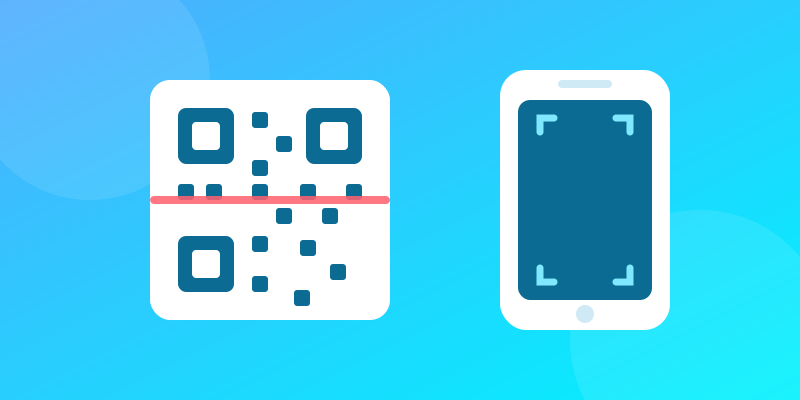
QR codes went from a niche Japanese manufacturing tool to something scanned billions of times a day, largely because restaurant menus needed a contactless option almost overnight. But most people who scan one every week have never thought about how it actually works — or the smarter ways it can be used beyond a menu link.
Where QR Codes Came From
QR ("Quick Response") codes were invented in 1994 by Denso Wave, a subsidiary of Toyota, to track vehicle parts through the manufacturing process faster than traditional barcodes allowed. A standard barcode can only store data in one direction (its width), giving it limited capacity. A QR code stores data in two dimensions — both width and height — which lets it hold vastly more information in the same physical space.
How a QR Code Actually Stores Data
Those black-and-white squares aren't random. They encode data using a system that converts text or a URL into a binary sequence, then arranges it into the grid according to the QR specification, alongside three large "finder" squares in the corners that let a scanner instantly recognize the code's orientation, even if it's rotated or viewed at an angle.
Critically, QR codes also include error-correction data using a method called Reed-Solomon coding. This is why a QR code can still scan successfully even if it's partially smudged, torn, or has a logo placed over the middle — the code contains redundant information that lets a scanner reconstruct the missing pieces, up to a certain damage threshold depending on the error-correction level chosen when it was created.
Practical Uses Beyond Restaurant Menus
- Wi-Fi sharing: A correctly formatted QR code can let guests join your Wi-Fi network by scanning, without ever typing the password.
- Business cards and resumes: A QR code linking to your LinkedIn profile or portfolio saves the other person from typing a URL.
- Event check-in and ticketing: Unique QR codes per attendee let venues scan and verify entry instantly.
- Product packaging: Linking to setup guides, warranty registration, or authenticity verification without cluttering the box with text.
- Printed marketing: Flyers, posters, and packaging can link straight to a website, video, or special offer.
A Few Practical Tips
Keep the encoded text or URL as short as possible — shorter content produces a simpler, less dense code that's easier and faster for phone cameras to scan, especially from a distance or on printed material. Always test your QR code with more than one phone before printing it in bulk, since lighting, camera quality, and printing resolution can all affect scan reliability. And remember that a QR code's destination isn't locked in visually — if it links to a live URL you control, you can update where it points without reprinting the code, as long as you keep the same underlying link (for example, a URL shortener) active.
Need a QR code for a link or message?
Generate a Free QR Code